
Plenary Speakers
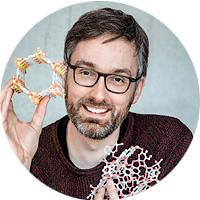
Professor Rob Ameloot
ERC grant holder from Katholieke Universiteit Leuven, will talk about the Nobelprize worthy topic of Metal Organic Frameworks: “The need for speed in measuring multicomponent adsorption in metal-organic frameworks and sensing applications”.
Professor Hendrik Bluhm
ECASIA 2026 Award Laureate, will be talking about “Investigation of reactions at liquid-vapor interfaces by
Hendrik Bluhm’s research focuses on the investigation of heterogeneous interfaces under reaction environments, with emphasis on liquid-vapor interfaces under atmospherically-relevant conditions. He is also working on the development of new sample environments and related instrumentation for in situ measurements using synchrotron and laboratory-based ambient pressure X-ray photoelectron spectroscopy. Since 2018 he is a group leader at the Fritz Haber Institute of the Max Planck Society in Berlin. Previously he served as a senior scientist in the Chemical Sciences Division and Advanced Light Source at Lawrence Berkeley National Laboratory.
Investigation of reactions at liquid-vapor interfaces by X-ray photoelectron spectroscopy
Heterogeneous reactions at liquid-vapor interfaces play a major role in the environment and atmosphere. The investigation of chemical reactions and transport processes, in particular at aqueous solution-vapor interfaces, at realistic partial pressures, temperatures and time scales, is thus of great importance for a better understanding and theoretical modeling of some of the most important processes in the environment and atmosphere. This talk discusses the challenges and obstacles for measuring heterogeneous chemical reactions at liquid-vapor interfaces using X-ray photoelectron spectroscopy (XPS) and suggests experimental strategies to overcome these challenges. We will also demonstrate how inelastic scattering effects can be used to overcome the inherent depth-resolution limit in XPS. The talk will in addition showcase an investigation of trace gas uptake by an aqueous solution, which indicates that the mechanism of gas uptake at the interface differs markedly from uptake in the bulk of the solution, which has implications for the modeling of interfacial reactions in the atmosphere.
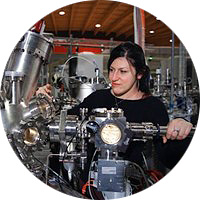
Dr Claudia Cancellieri
Group Leader of the “Interface Reactivity of Nanostructured Materials” group and a senior research scientist at Empa (Swiss Federal Laboratories for Materials Science and Technology). She will focus on Laboratory HAXPES/XPS for Depth-Resolved Chemical and Electronic Structures!
Dr Dominique Costa
Research director at Institut de Recherche de Chimie Paris, will be talking about “Adsorption at the Atomic Scale: Unraveling Surface Interactions Through Theory and Experiment”!
Adsorption at the Atomic Scale: Unraveling Surface Interactions Through Theory and Experiment
Density Functional Theory (DFT) is a cornerstone of surface science, enabling the atomic-scale exploration of molecular adsorption on metal and oxide surfaces. By predicting adsorption energies, charge transfer, and bonding geometries, DFT facilitates the tailored functionalization of surfaces, unlocking customized properties for applications in corrosion protection, adhesion, and organic electronics. This presentation will highlight how DFT synergizes with key experimental techniques—such as Scanning Tunneling Microscopy (STM), X-ray Photoelectron Spectroscopy (XPS), Infrared Spectroscopy (IR), and Atomic Force Microscopy (AFM)—to create a powerful feedback loop.
In this talk, we will illustrate the theory-experiment dialogue with concrete examples related to corrosion, adhesion, and electronics. In corrosion science, the combination of DFT with XPS and ToF-SIMS elucidates the mechanisms of inhibitor adsorption, validating theoretical models of corrosion mitigation. For adhesion and biomolecular interactions, XPS, AFM and IR provide nanoscale insights into molecular bonding, while DFT refines our understanding of interfacial forces. In organic electronics, STM reveals the structural order of self-assembled monolayers, with DFT offering critical insights into the driving forces for adsorption and resulting electronic properties.
This integrated approach bridges atomic-level theory with macroscopic observations, enabling the design of functional surfaces with tailored properties.
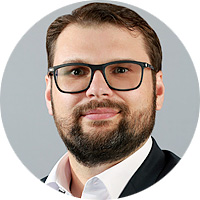
Dr Vladyslav Turlo
Research scientist at Empa (Switzerland) and founder of OptiMat Chat – a collaborative AI agent platform for materials discovery through conversation. His talk will focus on the software revolution in computational materials design and characterization enabled by foundational machine learning models.
Vladyslav Turlo is a Scientist in Computational Engineering at Empa, the Swiss Federal Laboratories for Materials Science and Technology. He received his Ph.D. in Physical Chemistry from Université de Bourgogne (France, 2016) and held a postdoctoral position at the University of California, Irvine, before joining Empa in 2020. His research sits at the interface between atomistic simulation, artificial intelligence, and experimental surface science: he develops and applies advanced computational characterization methods that give a physically grounded reading of XRD, XPS, HAXPES, Auger parameter, and STEM data on buried interfaces and thin films. Recent highlights include unveiling hydrogen chemical states in ALD-grown amorphous alumina, explaining anomalous interface stresses in immiscible metallic nanomultilayers, and characterizing phase-/temperature-/grain size-dependent thermal conductivity of thin film battery cathode materials. He is (co-)PI of more than CHF 1.4 M in Swiss research funding (SNSF, NCCR MARVEL, CSCS, Empa), has co-authored 40+ peer-reviewed papers, and has delivered 10+ invited lectures at international conferences. He currently leads efforts to build agentic AI platform OptiMat Chat (optimat.chat) for materials discovery through conversation. More details about his research are available at vturlo.science.